
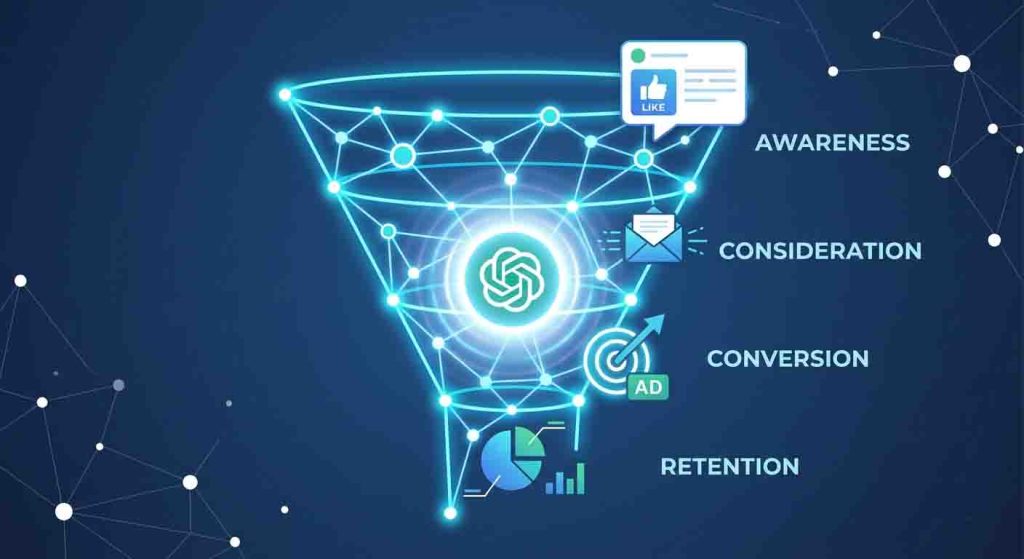
How to use ChatGPT for Marketing
Artificial intelligence isn’t the future of marketing—it’s the present. With over 40% of companies now spending millions annually on AI tools, the question is no longer whether to adopt AI, but how to apply it for maximum ROI. If you’re looking for a practical starting point, how to use ChatGPT for marketing is one of the most valuable skills you can develop now.
ChatGPT has evolved far beyond a simple chatbot. With tiers ranging from free to 200permonthfortheProplan,andAPIpricingaslowas5 per million input tokens for GPT-5.5, it offers accessible power for businesses of all sizes. But raw AI output alone won’t rank or convert. Google’s Helpful Content Update prioritizes people‑first, experience‑driven content—regardless of whether a human or an AI created it. The key is using ChatGPT as a strategic copilot, not a replacement.
In this guide, you’ll learn exactly how to use ChatGPT for marketing across email, social media, ad copy, audience segmentation, and full‑funnel automation. Each section includes copy‑paste prompts, step‑by‑step workflows, and measurable benefits.
1. Email Marketing with AI: Personalization at Scale
Personalization drives email performance, yet crafting tailored messages for hundreds or thousands of subscribers is time‑intensive. Email marketing with AI solves this by generating relevant, segmented drafts in seconds.
How to Use ChatGPT for Email Personalization
Start by defining your audience segment and email goal. For example, a re‑engagement campaign for inactive users requires a different tone than a welcome sequence for new sign‑ups.
Example Prompt:
“Act as a B2B email marketing specialist. Write a 3‑email re‑engagement sequence for inactive SaaS subscribers who haven’t opened an email in 90 days. Tone: helpful, not salesy. Each email should include a subject line, body copy, and a soft CTA. Personalize using their first name and the features they used most frequently when active.”
A/B Testing and Subject Line Optimization
Feed your existing campaign data into ChatGPT to generate 5–10 subject line variations for A/B testing. You can specify emotional angles—friendly, persuasive, or playful—to match your brand voice.
Automate Lead Nurturing
Marketers can integrate ChatGPT with workflow automation platforms to draft personalized intro emails based on form data. For instance, an n8n workflow can capture a lead’s company info, enrich it via online research, and have ChatGPT‑4o generate a tailored email draft saved directly to Gmail. This reduces manual outreach time by over 50%.
💡 Pro Tip: Always review AI‑generated emails for brand voice consistency and factual accuracy. Use ChatGPT as a first‑draft generator, then edit for human nuance.
2. Content Generation with ChatGPT for SEO & Authority
Content generation with ChatGPT is a game‑changer, but only when combined with human oversight and SEO best practices.
The SEO‑Friendly Workflow
According to Google’s guidelines, AI content is acceptable as long as it’s helpful, original, and demonstrates first‑hand experience (E‑E‑A‑T). Here’s a proven 6‑step workflow:
- Define goal & audience. Awareness, consideration, or conversion?
- Create a detailed prompt. Include tone, keywords, and desired structure.
- Generate a draft. Use ChatGPT to outline or write the initial version.
- Optimize for SEO. Add headings (H2/H3), internal links, and natural keyword placement.
- Human edit for clarity & uniqueness. Remove fluff and add original insights.
- Review against E‑E‑A‑T. Ensure content demonstrates experience, expertise, authority, and trust.
As one SEO expert noted, “Use ChatGPT for ideas and drafts, but optimize with real keywords, structure, and human edits if you want it to rank”.
Getting Cited by ChatGPT Search
To appear in ChatGPT’s own search results, focus on clear headings (H2/H3), structured FAQs, strong authority signals (backlinks, brand mentions), and regular content updates.
Example Blog Prompt:
“Write a 1,500‑word beginner’s guide to [topic]. Target audience: small business owners. Use these keywords: [list]. Include an intro, 5 H2 sections, a comparison table, and a FAQ. Tone: practical and data‑driven.”
3. ChatGPT Prompts for Social Media Marketing
Creating consistent social media content across multiple platforms is a major challenge. ChatGPT prompts for social media marketing can generate post ideas, captions, and even full content calendars.
Prompt Framework for High‑Engagement Posts
The most effective social prompts include five components: brand voice, target audience, platform, goal, and desired format.
Example (LinkedIn / Twitter):
“Write a LinkedIn post announcing our new [product feature]. Brand voice: expert but approachable. Target audience: marketing directors. Goal: drive demo sign‑ups. Include a hook, 3 key benefits, a client quote, and a CTA with link. Keep it under 200 words.”
Content Calendar Generation
Ask ChatGPT to create a 30‑day content calendar around a specific theme or product launch. It can suggest timely hooks, trends, and platform‑specific formats.
💡 Pro Tip: Use ChatGPT to repurpose long‑form content (e.g., blog posts) into Twitter threads, LinkedIn carousels, and Instagram captions—maximizing mileage from a single asset.
4. Customer Segmentation Using ChatGPT for Sharper Targeting
Generic messaging wastes ad spend. Customer segmentation using ChatGPT helps you identify high‑value audience groups based on behavior, demographics, and pain points—without expensive consulting fees.
Step‑by‑Step Segmentation Prompt
- State your objective. (e.g., “Find three customer segments for my organic pet food brand.”)
- Provide business context. Describe your product, price point, and current customers.
- Ask for actionable segments. Request demographics, psychographics, and suggested messaging for each group.
Example Prompt:
“My company sells project management software for remote teams. Help me identify 5 customer segments I haven’t considered. For each segment, include: job title, key pain point, preferred communication channel, and one hook that would grab their attention.”
Creative Market Exploration
ChatGPT excels at generating non‑obvious segments. For a craft brewery marketing agency, it might suggest “homebrewers turned entrepreneurs” or “beer tourism companies”—ideas you might not have considered otherwise.
Use these segments to create hyper‑targeted Facebook Audiences or Google Ads remarketing lists.
5. ChatGPT for Ad Copy That Converts
ChatGPT for ad copy can reduce campaign setup time by up to 50% while improving ROAS. The key is moving beyond generic “10 catchy ads” prompts.
The High‑Converting Prompt Structure
Most ad prompts fail because they lack strategy. Instead, ask for angles, hooks, and objection handling.
Example Prompt for Google / Meta Ads:
“Generate 6 distinct ad angles for [product]. For each angle, provide: hook (first line), core promise, social proof type, and the main objection it addresses. Then pick the 2 best angles for cold traffic and explain why.”
Platform‑Specific Best Practices
- Google Search Ads: Focus on intent and keyword‑rich headlines.
- Meta (Facebook/Instagram) Ads: Prioritize emotional hooks and social proof.
- LinkedIn Ads: Highlight professional ROI and case studies.
After running an A/B test, feed performance data back into ChatGPT to refine winning copy. This creates a closed‑loop optimization system.
6. AI Marketing Automation Workflows
AI marketing automation goes beyond simple content generation. ChatGPT can now act as a strategic “agent” that coordinates specialized roles.
Build a Virtual Marketing Team
Using multi‑agent workflows, one ChatGPT instance can role‑play as a CMO, while another acts as a copywriter and a third as an SEO expert. Each agent operates independently based on your brief.
Example Use Case:
- CMO Agent: Receives your high‑level goal.
- Copywriter Agent: Drafts the campaign copy.
- SEO Agent: Optimizes headings and keyword density.
- Brand Strategist Agent: Ensures tone consistency.
Sales Funnel Automation
Use ChatGPT to script an entire sales funnel: lead magnets, nurture sequences, objection‑handling emails, and follow‑up reminders. With platforms like Pabbly or n8n, these outputs can be directly integrated into your CRM.
💡 Pro Tip: Start small. Automate one repeatable task—like blog outline generation or email drafting—before scaling to full‑funnel automation.
7. Conversational AI in Marketing: ChatGPT Ads & Beyond
Conversational AI in marketing is rewriting how brands interact with customers. OpenAI’s introduction of ChatGPT Ads allows brands to place native, conversation‑relevant ads directly within ChatGPT’s interface. Early adopters include retail and grocery, where 44% of trial inventory went.
What Makes Conversational Ads Different
Traditional ads interrupt. Conversational ads integrate. When a user asks ChatGPT for product recommendations, ads appear naturally within the flow. This requires hyper‑personalized copy that fits the conversational context.
Strategy: Map 3–5 primary user intents related to your product. For each intent, create a micro‑segment and tailor ad copy specifically to that conversation path.
Conversational Customer Support
Beyond ads, AI‑powered support agents can handle common inquiries, qualify leads, and book appointments—freeing your human team for complex tasks. OpenAI’s own proactive sales assistant for ChatGPT Enterprise demonstrates how conversational AI can extend sales capacity without replacing reps.
Also Read, Best AI Tools for YouTube Creators
Conclusion: Your Roadmap to AI-Powered Marketing
Learning how to use ChatGPT for marketing isn’t about replacing your team—it’s about amplifying their impact. From personalized email sequences and SEO‑friendly blog posts to hyper‑targeted ad copy and automated workflows, ChatGPT offers a practical, affordable way to scale your marketing efforts.